inquiry
65337e7cc4b2e10867

Leave Your Message

0%

A carbon fiber boom isn’t just some lightweight tube attached to your sail — it’s a carefully designed spar that plays a huge role in controlling your sail shape, handling loads, and adjusting to changing conditions out on the water. When you compare it to aluminum, carbon fiber offers a pretty impressive stiffness-to-weight ratio. You really start noticing the difference when you’re lifting the boom, powering out of a tack, or handling a big sail in stronger winds. It feels more responsive and connected.

James Hall, a composite spar engineer from Hall Spars, hits the nail on the head when he says, “Good composite design isn’t just about weight — it’s about managing loads all along the spar.” That’s a real-world truth. A carbon fiber boom needs to work as a complete system — everything from the laminate and fittings to the gooseneck, vang attachment, and internal reinforcements has to cooperate seamlessly. One weak link can lessen the value of all that expensive material.

Manufacturers like Hall Spars and Southern Spars pay close attention to fiber orientation, resin choices, and curing techniques to balance stiffness with just enough flexibility. A well-made carbon fiber boom can actually reduce crew fatigue, keep your sail profile cleaner, and even make your boat more responsive during maneuvers.

But, let’s be real — carbon isn’t some magic answer. Not even close.

Damage from impacts can hide under that shiny surface, and if you don’t store or inspect your gear properly, problems can creep up over time. It’s all about the design, installation, maintenance, and honest records of inspections. And here’s where things get a little tricky. A lighter boom might feel faster and more nimble, but the lightest isn’t always the safest or the best fit for your boat. The right choice really depends on your boat size, how you sail, expected loads, your budget, and a good professional’s opinion.

So, in the end, selecting the right boom is about finding that sweet spot — it’s not just about saving weight, but making sure it’s built to last and suits your style of sailing.

What Is a Carbon Fiber Boom and Why Use It?

Definition and Basic Structure of a Carbon Fiber Boom

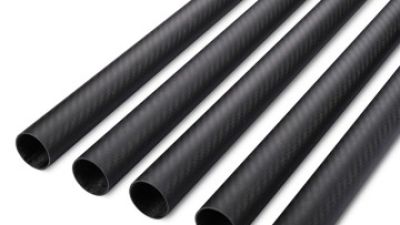
A carbon fiber boomis a long, lightweight structural arm used to extend, support, or control equipment. It transfers force from one mounting point to another while keeping overall weight low. The basic structure usually includes a carbon fiber tube, bonded end fittings, and protective outer layers. The tube carries most of the bending and compression loads. Carbon fibers provide stiffness, while the surrounding resin holds the fibers in position and protects them from moisture.

Fiber direction is important. Longitudinal fibers resist bending, while angled layers improve resistance to twisting. Some booms use a foam or honeycomb core to increase thickness without adding much weight. The ends may contain aluminum or composite inserts for bolts and hinges. These connection areas deserve careful inspection. Small cracks near a fitting can become serious under repeated loading.

For an OEM Carbon Fiber Boom, engineers normally define length, diameter, wall thickness, load direction, and attachment method before production. Manufacturing may involve controlled fiber winding, hand layup, or automated placement. Each method affects consistency and cost. In practical use, the boom should be checked for impact marks, loose fittings, and unusual deflection. Carbon fiber does not always show damage clearly. I have found that relying only on a clean surface can be misleading. The structure may look perfect and still need testing.

How Carbon Fiber Booms Are Manufactured

A carbon fiber boom is a lightweight structural tube used where stiffness and low mass matter. Its manufacturing process begins with material selection. Carbon fibers are combined with a resin system, often as dry fabric or pre-impregnated sheets. Engineers choose fiber directions for bending, twisting, and compression loads. The design is not simply a thinner metal tube.

Technicians wrap the carbon layers around a mandrel, which defines the boom’s inner shape. Each ply must follow the specified angle and overlap. Small wrinkles can create weak points. They are easy to miss. The wrapped assembly is covered with release film, breather fabric, and a vacuum bag. Vacuum pressure removes trapped air and helps consolidate the layers. The part then cures inside a heated mold or controlled oven. Temperature, pressure, and time are recorded throughout the cycle. In practice, curing is precise, but never perfectly forgiving.

After curing, workers remove the mandrel and trim the ends with controlled tools. Openings for fittings are drilled carefully to avoid delamination. Quality checks may include visual inspection, dimensional measurement, tap testing, and ultrasonic scanning. Load testing can reveal defects that the surface does not show. A boom can look excellent and still need rejection. Engineers also review fiber alignment, resin distribution, and bond areas before assembly. This attention gives carbon fiber its high stiffness-to-weight performance, while leaving little room for careless handling.

What Is a Carbon Fiber Boom and Why Use It? - How Carbon Fiber Booms Are Manufactured
Data Dimension Typical Data or Specification Why It Matters for a Carbon Fiber Boom Manufacturing or Design Consideration
Basic Definition A carbon fiber boom is a lightweight structural tube, beam, or spar made from carbon fibers embedded in a polymer matrix, usually epoxy. It transfers tension, compression, bending, or torsional loads while keeping structural mass low. The fiber direction, laminate thickness, tube geometry, and resin system are selected according to the expected loading.
Common Applications Used in sailing equipment, antenna supports, camera systems, robotic arms, sporting equipment, and lightweight aerospace or industrial structures. The material is useful where low mass, high stiffness, and corrosion resistance are important. Each application requires a different balance of stiffness, impact resistance, joint strength, dimensional stability, and cost.
Carbon Fiber Density Approximately 1.75–1.95 g/cm³ for the carbon fiber itself. This is substantially lower than many metals used for structural tubes, helping reduce the weight of the finished boom. The final composite density is higher than the fiber density because it also contains resin, coatings, inserts, and fittings.
Composite Fiber Content Many structural Carbon Fiber Laminates contain approximately 50–65% fiber by volume. A higher fiber volume can improve stiffness and strength when the fibers are properly aligned and fully impregnated. Excess resin adds mass without providing the same longitudinal stiffness as the fibers; insufficient resin can cause voids and poor bonding.
Specific Stiffness Carbon fiber composites generally provide a high stiffness-to-weight ratio compared with common metallic materials. A stiffer boom can reduce deflection, improve positioning accuracy, and maintain its shape under load. Stiffness depends on fiber type, fiber orientation, laminate architecture, cross-sectional geometry, and manufacturing quality.
Directional Behavior Unidirectional carbon laminates are strongest and stiffest mainly along the fiber direction; woven and multidirectional plies provide properties in several directions. The boom can be tailored to resist bending, axial loads, and torsion without adding unnecessary material. Designers commonly combine 0-degree, ±45-degree, and 90-degree plies to create a balanced laminate.
Thermal Expansion Carbon fibers have very low or sometimes negative longitudinal thermal expansion, while the resin expands more with temperature. A well-designed carbon structure can maintain good dimensional stability over changing temperatures. The final coefficient of thermal expansion depends on fiber orientation, resin content, laminate balance, and temperature range.
Corrosion Resistance Carbon fiber and cured polymer matrices do not rust like steel and are generally resistant to moisture and many chemicals. This can reduce corrosion-related maintenance in marine, outdoor, and humid environments. Metal fittings require attention because direct contact between carbon and some metals can create galvanic corrosion in the presence of an electrolyte.
Primary Manufacturing Method Roll wrapping places resin-impregnated carbon layers around a mandrel to form a tube or tapered boom. It supports controlled fiber orientation and is suitable for cylindrical or tapered hollow structures. The wrapped laminate is compacted, cured under controlled temperature, and then removed from the mandrel when the tooling allows it.
Pultrusion Continuous carbon fibers are pulled through a resin bath or impregnation system and then through a heated shaping die. Pultrusion is efficient for producing long profiles with consistent cross-sections and predominantly longitudinal fibers. Additional reinforcement may be needed when the boom experiences significant transverse loads, impact, or torsion.
Filament Winding Resin-coated fibers are wound onto a rotating mandrel at controlled helical and longitudinal angles. This method is effective for tubular structures that need tailored hoop, axial, and torsional reinforcement. Winding angle, tension, resin distribution, and layer sequence strongly influence the finished mechanical properties.
Prepreg Processing Prepreg carbon consists of fibers pre-impregnated with a controlled amount of resin and is laid onto a mold or mandrel before curing. It can provide accurate fiber placement, consistent resin content, and high-quality surface finishes. Prepreg usually requires controlled storage and a defined cure cycle, often using an oven or autoclave depending on the material system.
Curing Curing converts the liquid or partially cured resin into a solid polymer matrix through a controlled time-and-temperature process. A complete cure is necessary for the boom to achieve its intended stiffness, strength, and environmental resistance. Temperature ramp, dwell time, pressure, and cooling rate must follow the resin system requirements to limit voids and distortion.
Typical Cross-Sections Round tubes, oval tubes, rectangular beams, tapered tubes, and box sections are common forms. Cross-sectional shape strongly affects bending stiffness, torsional rigidity, aerodynamic behavior, and packaging efficiency. Increasing the distance of material from the neutral axis can raise bending stiffness without proportionally increasing mass.
Surface Protection Finished booms may use a clear protective coating, paint, abrasion layer, or UV-resistant finish. Protection helps reduce damage from ultraviolet radiation, moisture, scratches, and handling. The coating should be compatible with the cured resin and should not conceal cracks or impact damage that require inspection.
Joining Methods Common joints include bonded sleeves, bonded inserts, mechanical fasteners, clamps, and molded end fittings. Joints transfer loads between the composite boom and attached components. Load introduction must be gradual because concentrated holes, sharp edges, and poorly supported fasteners can damage the laminate.
Main Advantages Low mass, high specific stiffness, high specific strength, corrosion resistance, and customizable directional properties. These characteristics can improve efficiency, handling, reach, acceleration, and dimensional control. The advantages are achieved only with suitable laminate design, quality control, and protection against impact and joint failure.
Main Limitations Higher material and processing cost, sensitivity to concealed impact damage, brittle failure behavior, and complex repair requirements. A boom may appear undamaged while internal delamination or fiber breakage has reduced its load capacity. Inspection methods may include visual checks, tap testing, ultrasonic testing, or other non-destructive evaluation techniques.
Quality-Control Checks Typical checks include dimensional inspection, fiber-orientation verification, resin-cure confirmation, void assessment, surface inspection, and proof testing. Consistent production helps ensure that the boom meets its required stiffness, strength, and safety factors. Critical structures should be evaluated against documented design loads and accepted manufacturing criteria.
Design Priority Fiber orientation and load-path design are usually more important than simply increasing the total amount of carbon fiber. Correctly aligned fibers carry loads efficiently and avoid unnecessary weight. A reliable design considers bending, compression, tension, torsion, buckling, impact, fatigue, joints, and environmental exposure.

Key Properties of Carbon Fiber Booms

What Is a Carbon Fiber Boom and Why Use It?

A carbon fiber boom is a slender structural member made from carbon fibers embedded in resin. The fibers carry most of the load, while the resin holds their alignment and transfers stress. In practical projects, engineers choose the fiber direction according to bending, compression, or twisting forces. This detail matters. A tube may look strong, yet poor fiber placement can create weak areas near joints and fittings. Field experience also shows that smooth surfaces can hide internal damage after impact.

Key Properties of Carbon Fiber Booms

The main advantage is an excellent stiffness-to-weight ratio. A lighter boom can improve handling, reduce support loads, and make installation easier. Carbon fiber also resists corrosion from moisture and many outdoor environments. Its fatigue performance is useful when the structure experiences repeated movement. The material naturally reduces vibration, creating a quieter and more controlled assembly. It also has low thermal expansion along the fiber direction, helping maintain alignment during temperature changes.

Carbon fiber is not magic. It can suffer from delamination, crushing, or damage around drilled holes. Designers must inspect connections carefully and protect vulnerable edges. A Custom Carbon Fiber Boom can include reinforced ends, tailored wall thickness, and specific fiber angles for its working loads. Manufacturing quality remains critical, especially curing temperature and resin consistency. I would not rely on appearance alone; documented testing and regular inspection provide stronger evidence of reliability. Engineers should also review the complete load path, because a strong boom cannot compensate for a weak attachment.

Common Applications for Carbon Fiber Booms

Carbon fiber booms appear wherever reach, low weight, and controlled movement matter. In film production, camera operators use them to position cameras above crowds or moving subjects. A well-balanced boom reduces arm fatigue during long shooting sessions. Broadcast crews also mount microphones on long booms for clear audio without entering the frame. Small details matter. Cable routing, grip texture, and locking strength can affect daily performance.

Industrial inspectors use carbon fiber booms with cameras, lights, and sensors inside tanks, ducts, and elevated structures. The material resists bending better than many aluminum alternatives, while remaining easier to handle. Survey teams may attach scanners or measurement tools for work around bridges and difficult terrain. An ODM Carbon Fiber Boom can be configured with different lengths, tube diameters, joints, and mounting interfaces. Engineers should confirm load limits before adding equipment. Carbon fiber is stiff, but it can fail after impact or hidden crushing.

Marine technicians use booms for lightweight antenna supports and instrument positioning. Robotic systems may use them as precise arms for inspection or sampling tasks. From field experience, vibration control often matters more than maximum extension. A long tube can look impressive, yet become difficult to steady in wind. I have also seen teams overlook repair access. That mistake makes routine maintenance slower. Weather sealing, balanced clamps, and regular visual checks deserve equal attention. Practical testing remains essential because laboratory performance does not always match uneven ground, moving platforms, or rushed operators.

What Is a Carbon Fiber Boom and Why Use It?

Carbon fiber booms are lightweight tubular or tapered structural members used to extend reach while maintaining high stiffness. Their low mass, corrosion resistance, and low thermal expansion make them suitable for applications where long, rigid structures must be easy to move or accurately positioned.

The chart shows representative maximum boom lengths commonly encountered in selected applications. Actual dimensions depend on payload, unsupported span, stiffness requirements, safety factors, and the specific structural design. Carbon fiber is often selected when reducing weight and controlling deflection are more important than minimizing initial material cost.

Advantages Over Aluminum and Other Boom Materials

A carbon fiber boom is a hollow spar that controls sail shape and transfers loads to the mast. Its main advantage is stiffness with low mass. The U.S. Department of Energy’s Lightweight Materials R&D Plan lists carbon-fiber composites near 1.5–1.6 g/cm³, compared with aluminum at about 2.7 g/cm³. This density gap can reduce boom weight and improve handling. A lighter boom also lowers rotational inertia, making reefing and trimming feel quicker.

Stiffness is not the whole story. Carbon does not rust, and it resists many marine corrosion problems better than aluminum. However, carbon can suffer hidden impact damage, especially around fittings and drilled holes. It can also create galvanic corrosion when touching aluminum hardware. A 2023 technical review in CompositesWorld noted that fiber orientation and resin quality strongly affect real-world performance. That detail matters. A poorly designed carbon boom may flex, crack, or fail earlier than expected. Carbon is not magic.

Tips: For a Drill Carbon Boom, inspect the surface after hard contact. Look for soft spots, whitening, cracks, or unusual sounds during tapping. Use isolated fittings and follow the load guidance in ISO 12215-9 for sailing rig design. Ask for documented laminate specifications, test results, and repair procedures. Weight savings should never replace proper engineering.

How to Choose and Maintain a Carbon Fiber Boom

What Is a Carbon Fiber Boom and Why Use It?

Choosing and maintaining a carbon fiber boom requires more than checking its appearance. Start with the correct length, diameter, and stiffness for your equipment and sailing style. A boom that feels too stiff may reduce comfort during long sessions. One that flexes excessively can feel unstable under pressure. I once selected a boom that looked ideal but felt tiring after an hour. That experience changed how I evaluate carbon components.

Inspect the surface before every use. Look for cracks, soft spots, unusual whitening, or damaged fittings. Pay close attention near the head, tail, and adjustment areas. These points often receive repeated stress. A small crack is not cosmetic. Stop using the boom if damage appears, and ask a qualified technician for an inspection. Do not hide problems with tape or resin.

Rinse the boom with fresh water after exposure to salt or sand. Move the adjustment parts while rinsing them. This helps remove grit from narrow gaps. Dry the boom fully before storage. Keep it away from direct sunlight, high heat, and sharp tools. Never leave heavy equipment pressing against the tube. Carbon fiber is light and strong, but it is not careless-proof. I still miss small details sometimes, especially after a tiring session. A slower inspection is usually wiser. Check the grip, clamps, and connections again before entering the water.

Customize DIY 3K Carbon Fiber Drone Tubes: Insights from Grand View Research’s Drone Market Report

As the drone market continues to expand across commercial inspection, mapping, agriculture, photography, and industrial services, builders are placing greater value on lightweight, durable, and adaptable airframes. Customized DIY 3K carbon fiber drone tubes offer a practical solution for developing frames around specific payloads and flight requirements. The balanced weave provides a clean appearance and reliable structural support, while the material’s high strength-to-weight ratio can help reduce unnecessary mass and improve flight efficiency. Tubes may be tailored by length, diameter, wall thickness, surface finish, and mounting method to suit different frame geometries.

Market research on the drone sector highlights growing demand for longer flight times, compact designs, and equipment that can be adapted to specialized tasks. Carbon fiber tubing supports these goals by allowing builders to create rigid arms and connecting structures without adding excessive weight. For DIY projects, options such as cut-to-size sections, drilled mounting points, reinforced ends, and matte or polished finishes can simplify assembly and maintenance. Careful measurement is important, especially around motor mounts, joints, and vibration-sensitive components. Selecting the appropriate tube specifications helps create a balanced platform that is easier to customize as mission needs evolve.

FAQS

: What is a carbon fiber boom?

: It is a lightweight structural arm that extends, supports, or controls equipment. It transfers force between mounting points.

What parts make up a carbon fiber boom?

Common parts include a carbon fiber tube, bonded fittings, and protective outer layers. Some designs include foam or honeycomb cores.

Why does fiber direction matter?

Longitudinal fibers resist bending. Angled layers improve resistance to twisting. Together, they balance stiffness and control.

What details should be defined before production?

Engineers usually specify length, diameter, wall thickness, load direction, and attachment method. These choices affect performance, comfort, consistency, and cost.

How should I inspect a carbon fiber boom?

Check it before every use. Look for cracks, soft spots, whitening, impact marks, loose fittings, and unusual deflection. Pay special attention near joints and adjustment areas.

Is a clean surface proof that the boom is safe?

No. Carbon fiber damage may remain hidden beneath an undisturbed surface. A professional inspection or testing may still be necessary. Looks can mislead.

What should I do after finding a crack?

Stop using the boom immediately. Ask a qualified technician to inspect it. Do not cover the damage with tape or resin.

How should I clean and store the boom?

Rinse it with fresh water after salt or sand exposure. Move adjustment parts while rinsing narrow gaps. Dry it fully, then store it away from sunlight, heat, and sharp tools.

How can I choose suitable stiffness?

Match the length, diameter, and stiffness to your equipment and activity. Excessive stiffness may feel tiring. Too much flex can feel unstable under pressure.

What inspection habit is easy to overlook?

Recheck the grip, clamps, fittings, and connections before use. I sometimes miss small details after a tiring session. A slower inspection is wiser.

Conclusion

A Carbon Fiber Boom is a lightweight structural component made from carbon fibers embedded in a resin matrix, typically formed into a hollow tube or tailored profile for strength and stiffness. Its manufacturing process may include fiber alignment, resin impregnation, molding, curing, and careful finishing. This construction gives the boom a high strength-to-weight ratio, excellent rigidity, low thermal expansion, and good resistance to corrosion and fatigue.

Carbon Fiber Booms are used in applications such as sailing equipment, camera supports, robotics, sporting goods, and other lightweight structures. Compared with aluminum, they can reduce weight while maintaining reliable performance and minimizing vibration, although they may cost more and require greater impact awareness. When choosing one, users should consider length, diameter, load capacity, stiffness, connection design, and operating conditions. Regular inspection, gentle cleaning, proper storage, and protection from sharp impacts can help maintain its performance and service life.

Sophia

Sophia

Sophia is a dedicated marketing professional at Shenzhen Feimoshi Technology Co., Ltd., where she plays a pivotal role in Project Three. With extensive knowledge of the company's innovative products, she expertly crafts engaging and informative content for the company's professional blog. Her......
Previous 2026 Best 3k Composite Plate Buying Guide for Global Buyers?