inquiry
65337e7cc4b2e10867

Leave Your Message

0%

Choosing the right 3K composite plateisn’t just about picking something that looks good—things like weight, stiffness, appearance, and how well it performs over time all matter. When most buyers are shopping around, they often compare different types like woven carbon fiber plates, prepreg options, epoxy laminates, hybrids, sandwich structures, machined parts, coated varieties, perforated, curved, or custom-cut plates. Each one serves a specific engineering purpose, so it’s not a one-size-fits-all deal.

This guide runs through ten practical options that international purchasing teams usually consider. We talk about fiber orientations, how consistent the resin is, the thickness tolerances, surface finish quality, edge detailing, and overall dimensional stability. Plus, it covers common requirements like ASTM or ISO testing standards, material traceability, inspection reports, how the packaging is handled, and export docs. A trustworthy supplier should be able to clearly explain their manufacturing process, and they’ll back up their claims with product samples and technical data.

Details really do matter. Just because a plate has a shiny, sleek surface doesn’t automatically mean it’s stronger. On the flip side, a lower price quote might hide weaker tolerances, limited testing, or less-than-ideal packaging. Before placing an order, it’s smart to double-check load conditions, exposure to heat, moisture risks, cutting precision, and how much product you’re planning to make. No single ranking or recommendation can cover every scenario—say, a racing part might need a different kind of Composite Plate than a robotic component, a medical enclosure, or an industrial fixture. So, this article offers useful comparisons rather than a one-size-fits-all answer. Keep in mind, some suggestions might need tweaking after testing—that’s totally normal.

Bottom line: careful evaluation, clear communication, and independent inspections can save you from expensive surprises when dealing across borders. The goal is to help you make smarter buying decisions, supported by solid engineering evidence and realistic supplier checks.
Top 10 3K Composite Plate Types for Global Buyers

What 3K Composite Plates Are and How Their Structure Works

3K composite plates are laminate panels made from carbon-fiber tows containing roughly 3,000 filaments each. The “3K” label describes the fiber bundle, not the plate thickness or strength.

During production, manufacturers spread these bundles into fabric or unidirectional layers. Resin surrounds the fibers and transfers loads between them. Pressure removes trapped air. Small voids still matter. AVK’s Composites Market Report 2024 estimates global composites production at approximately 12.7 million tonnes in 2023, showing the scale of this engineering sector.

Plate behavior depends on the stacking sequence. A 0-degree layer carries loads along its length. A 90-degree layer controls transverse strength. Layers at plus or minus 45 degrees improve shear and twisting resistance.

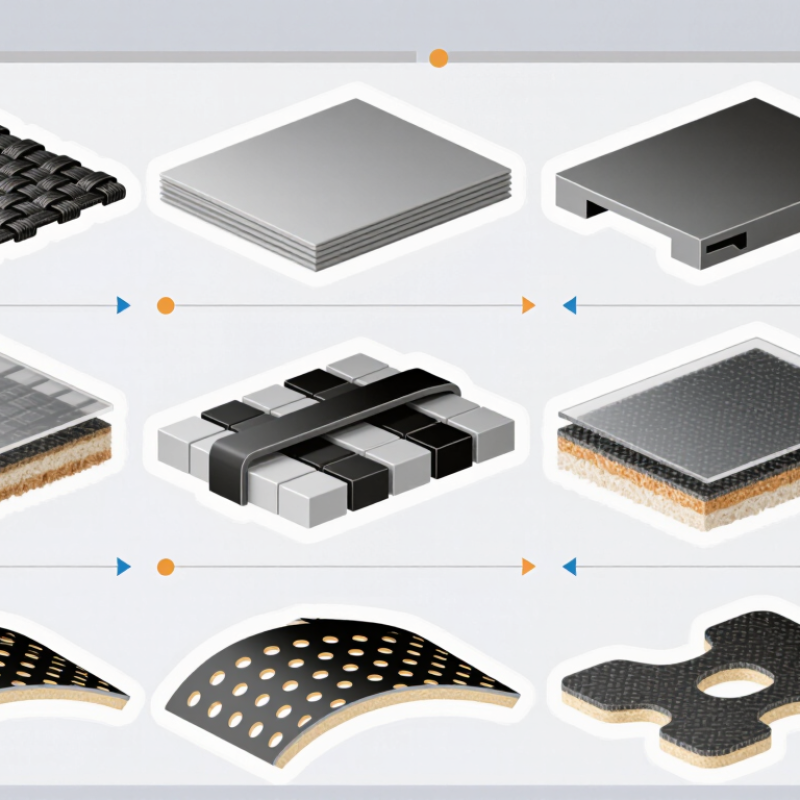
Common 3K plate types include plain weave, twill weave, unidirectional, hybrid, prepreg, wet-layup, molded, machined, sandwich, and textured plates.

Sandwich construction adds a foam or honeycomb core between thin skins. This increases bending stiffness without adding much weight.

The neat part is also the trap.

A plate can look perfect and still fail around drilled holes, edges, or bonded joints.

Moisture, impact, curing temperature, and fiber misalignment deserve inspection. ASTM D7264 and ISO 14125 provide useful flexural testing frameworks, but test results depend on specimen design.

Buyers should request fiber orientation, resin system, void content, thickness tolerance, and full mechanical data. I would not trust appearance alone. Real performance needs traceable testing.

Key Material Properties That Define 3K Composite Plate Performance

A 3k Composite Plate is defined by more than its smooth black surface. Its 3K carbon weave uses approximately 3,000 filaments per tow, balancing stiffness, weight, and visual uniformity. Fiber orientation controls load direction, while resin content affects strength, toughness, and surface quality. Small details matter.

Plate thickness must match the expected bending and compression loads. A thin panel may work for covers, but it can flex under repeated vibration. A thicker panel improves rigidity, yet adds weight and may increase machining stress. Fiber volume, void content, and curing consistency also influence real performance. A perfect-looking surface can still hide internal voids.

Global buyers should request test data for tensile strength, flexural modulus, impact resistance, and dimensional tolerance. ISO or ASTM-based methods make comparisons more reliable across suppliers. Temperature and moisture exposure deserve attention, especially for outdoor equipment and transport applications. Resin systems behave differently at low temperatures. This is often overlooked. Surface finish also matters when plates are bonded, drilled, or painted. Edges should be inspected for delamination after cutting. Choosing only by weave appearance is tempting, but it is not a dependable engineering method. Even published values need review, because laboratory samples may not represent the final plate size, processing method, or working environment.

Top 10 3K Composite Plate Types for Global Buyers - Key Material Properties That Define 3K Composite Plate Performance

No. 3K Composite Plate Type Reinforcement Architecture Typical Matrix Typical Density
(g/cm³)
Tensile Strength
(MPa)
Flexural Modulus
(GPa)
Service Temperature
(°C)
Key Performance Characteristics Typical Applications
1 3K Plain-Weave Carbon/Epoxy Plate Balanced 0°/90° plain weave Toughened epoxy 1.50–1.60 500–800 45–65 -50 to 120 Good two-direction stiffness, stable surface appearance, and easy handling; crimp slightly reduces straight-fiber efficiency. Machine covers, instrument panels, robotics, general structural components
2 3K 2×2 Twill Carbon/Epoxy Plate Balanced 0°/90° 2×2 twill Toughened epoxy 1.50–1.60 550–850 50–70 -50 to 120 Better drape and a smoother visual pattern than plain weave, with balanced in-plane properties and moderate impact resistance. Automotive trim, UAV panels, sporting goods, protective enclosures
3 3K Quasi-Isotropic Carbon/Epoxy Plate [0°/±45°/90°] laminate Toughened epoxy 1.52–1.62 450–750 40–60 -50 to 120 More uniform stiffness and strength across multiple loading directions; suitable where off-axis loads are significant. Load-bearing covers, structural brackets, test fixtures, aerospace interior panels
4 3K Unidirectional Carbon/Epoxy Plate Predominantly 0° fibers Epoxy 1.55–1.65 800–1,500 80–140 -50 to 120 Very high stiffness and strength along the fiber direction; comparatively weak transverse and through-thickness performance. Beams, spars, rails, reinforcement strips, lightweight structural members
5 3K Hybrid Carbon/Glass Composite Plate Carbon face layers with glass support layers Epoxy 1.65–1.90 350–750 35–65 -50 to 120 Combines carbon stiffness with the lower cost and higher impact tolerance of glass fiber; electrical behavior depends on the layer arrangement. Transport panels, industrial guards, marine components, cost-sensitive structures
6 3K Carbon/PEEK Thermoplastic Plate Woven or quasi-isotropic laminate PEEK thermoplastic 1.50–1.60 500–1,000 50–90 -60 to 250 High temperature capability, strong chemical resistance, low moisture uptake, and weldability; processing requires elevated temperature and pressure. Aircraft interiors, chemical equipment, high-temperature mechanical parts
7 3K Carbon/PPS Chemical-Resistant Plate Woven or multidirectional laminate PPS thermoplastic 1.55–1.70 450–900 40–80 -50 to 200 Low moisture absorption, good dimensional stability, strong resistance to fuels and many chemicals, and useful flame performance. Automotive under-hood parts, process equipment, electrical housings
8 3K Carbon/Basalt Hybrid Plate Carbon and basalt woven or layered hybrid Epoxy 1.60–1.85 400–800 40–70 -50 to 120 Improved impact and vibration tolerance compared with all-carbon laminates, while retaining useful stiffness and moderate cost. Marine panels, sports equipment, vehicle protection panels, industrial covers
9 3K Carbon/Phenolic Fire-Performance Plate Woven or quasi-isotropic laminate Phenolic resin 1.45–1.65 300–650 30–55 -50 to 150 Lower smoke and improved flame behavior compared with many standard epoxies; generally more brittle and less moisture-tolerant. Rail interiors, aircraft cabin panels, public-transport interior structures
10 3K Carbon Sandwich Plate with Core Carbon skins with aluminum honeycomb or polymer foam core Epoxy adhesive and skins 0.35–0.85 250–700* 25–80* -50 to 120* Very high bending stiffness-to-weight ratio; core selection controls shear strength, impact response, moisture resistance, and temperature capability. Aircraft panels, wind-energy structures, vehicle floors, large lightweight covers
Technical note: 3K identifies the nominal carbon-fiber tow size of approximately 3,000 filaments; it does not by itself define plate strength or stiffness. The values above are representative ranges for cured laminates and should be verified against the supplier’s laminate schedule, fiber volume fraction, thickness, test standard, and environmental requirements. *Sandwich-plate values are highly dependent on skin thickness, core type, core density, and test direction.

Top 10 3K Composite Plate Types by Material and Construction

3K Composite Plate Types by Material and Construction

Global buyers often compare ten practical 3K composite plate types. Plain-weave carbon and epoxy plates offer balanced strength and clean surfaces. Twill-weave carbon plates provide better drape and a distinctive diagonal appearance. Unidirectional carbon laminates focus fibers along one load direction. They suit beams, brackets, and reinforcement strips. Hybrid carbon-glass plates reduce cost while retaining useful stiffness. The glass layers can also improve impact tolerance.

Thermoplastic carbon plates using PEEK or similar matrices tolerate repeated heating better than standard epoxy plates. Phenolic carbon plates support projects requiring stronger flame and smoke performance, subject to testing. Solid laminate plates provide dense, consistent sections for machined components. Prepreg carbon plates usually deliver tighter fiber control and lower void content. Their performance depends heavily on curing pressure and temperature. Manufacturing details matter.

Sandwich plates with aluminum honeycomb cores offer high bending stiffness at low weight. Foam-core sandwich plates provide easier shaping and useful vibration control. Core bonding deserves close inspection. A weak bond can undermine an excellent skin. In practice, buyers should request fiber orientation, resin percentage, thickness tolerance, flatness, and test data. Check the actual laminate schedule, not only the product name. I have seen “identical” plates behave differently after machining. That is an easy warning to miss. Moisture exposure, edge sealing, and cutting methods also affect service life. Some specifications remain uncertain until samples are tested under real loads.

How to Compare Strength, Weight, Finish, and Durability

When comparing the top 10 3K composite plate types, begin with strength-to-weight performance. A 3K plain-weave plate often offers balanced rigidity and a tidy surface. Twill patterns can improve drape around curved parts. Unidirectional layers usually deliver stronger stiffness along one axis. Hybrid constructions may resist impact better, but their properties depend on fiber direction and resin quality. Request tensile, flexural, and impact data, not only impressive marketing numbers.

Weight matters during installation and transport. Measure the finished plate, including coatings, edges, and mounting hardware. A lighter panel is not automatically better. Thin plates may flex under constant loads.

Finish also deserves close inspection. Check gloss consistency, pinholes, edge trimming, and visible fiber alignment under direct light. Composite Plate Fit depends on accurate dimensions, stable tolerances, and compatible fasteners.

A beautiful plate can still fail if its holes shift by two millimeters.

Tips: Compare samples under the same light and temperature. Use calipers, not visual estimates. Ask for batch records and test standards. For durability, examine moisture resistance, abrasion results, UV exposure, and repeated-load performance. I have seen glossy surfaces hide uneven edges. That was a costly lesson. Also, laboratory figures may not reflect field handling, so test one sample before placing a large order. Allow for thermal movement and inspect cut edges carefully; small cracks often begin there.

Choosing the Right 3K Composite Plate for Global Applications

Choosing the right 3K composite plate starts with the working environment, not appearance. A 3K plain-weave plate offers balanced strength and a clean surface. Twill weave bends more easily around shallow curves. Unidirectional layers provide higher strength along one axis. That advantage can become a weakness under cross-directional loads.

Check the resin system carefully. Epoxy usually suits structural parts and stable indoor equipment. Toughened resin performs better where vibration or repeated impact is expected. For outdoor use, ask for UV protection and moisture testing. Temperature matters too. A plate near an engine needs different performance from one inside a control cabinet.

Measure before ordering. Confirm thickness tolerance, fiber orientation, surface finish, hole locations, and flatness. A 2 mm plate may look rigid but still flex across a wide span. I once selected a lightweight panel without checking edge loading. It passed a desk test and failed during assembly. That mistake changed our inspection checklist. Request documented tensile, flexural, and thermal data from a qualified laboratory. For electrical housings, verify insulation behavior and safe machining guidance. For a Solid Composite Plate, inspect cut edges for delamination, especially after drilling. Small flaws matter. Global buyers should also confirm packaging, humidity protection, customs documents, and repeatability between production batches.

Top 10 3K Composite Plate Types for Global Buyers

Choosing the Right 3K Composite Plate for Global Applications

The chart compares representative in-plane tensile strength and elastic modulus values for common 3K carbon-fiber composite plate constructions. Values are indicative engineering ranges converted to typical midpoints; actual performance depends on fiber orientation, resin system, fiber volume fraction, curing process, thickness, and testing standards.

International Buying Factors: Standards, Customization, and Shipping

Top 10 3K Composite Plate Types for Global Buyers

When buying 3K composite plates internationally, standards must match the final application. Confirm fiber weave, resin system, thickness tolerance, surface finish, and mechanical test methods. ISO and ASTM references can support comparison, but certificates need traceable batch numbers. A test report without production details is weak evidence. Ask for samples cut from the same production method. Small differences matter.

Customization often changes the buying risk. An OEM Composite Plate may require specific dimensions, drilled holes, edge bevels, colors, or a matte surface. Provide a controlled drawing with tolerances, not only a sample photograph. For example, a 2 mm plate with six 4 mm holes needs clear spacing and edge-distance rules. Manufacturers should confirm layup direction and inspection points before production. Perfect specifications rarely survive the first revision.

Shipping deserves equal attention. Long plates may need rigid crates, corner protection, moisture barriers, and visible handling marks. Check packing dimensions before calculating freight costs. Confirm the HS classification, delivery terms, export documents, and destination import requirements with qualified logistics professionals. Sea freight may reduce unit cost but extend lead times. Air freight protects schedules, yet dimensional weight can be surprisingly high. Pre-shipment inspection is useful, although it cannot replace receiving checks. A few photos are not enough.

0.3–20 mm CNC-Cut 3K Carbon Fiber Sheets: Insights from Grand View Research & MarketsandMarkets

CNC-cut 3K carbon fiber sheets in thicknesses from 0.3 to 20 mm are gaining attention as manufacturers seek lightweight, rigid, and dimensionally stable materials for demanding applications. The 3K woven architecture offers a balanced fiber pattern, while precision CNC machining supports consistent outlines, holes, and complex profiles. Thin sheets are suitable for covers, brackets, and protective panels; thicker formats provide greater stiffness for structural supports, tooling, and equipment components. Depending on the laminate design, these sheets can also deliver strong fatigue resistance and low thermal expansion compared with many conventional materials.

This demand reflects wider composite-industry growth. Grand View Research estimates that the global carbon fiber market was valued at approximately USD 4.1 billion in 2023 and projects continued expansion through 2030, supported by aerospace, transportation, energy, and industrial applications. MarketsandMarkets likewise forecasts strong market growth over the coming years, identifying lightweighting and improved fuel efficiency as major drivers. For buyers, selecting the correct thickness, fiber orientation, surface finish, and machining tolerance is essential. CNC-cut 3K sheets can help reduce secondary processing, improve repeatability, and shorten assembly time when specifications are clearly defined.

FAQS

What does “3K” mean in a composite plate?

“3K” describes a carbon-fiber bundle containing about 3,000 filaments. It does not indicate thickness or strength. Appearance can mislead.

How does the layer direction affect plate performance?

0-degree layers carry loads lengthwise. 90-degree layers improve transverse strength. Plus or minus 45-degree layers resist shear and twisting.

What is the difference between plain-weave and twill-weave plates?

Plain-weave plates offer balanced reinforcement and clean surfaces. Twill-weave plates drape more easily and show diagonal patterns. The pattern is not proof of strength.

Why are sandwich plates stiff but lightweight?

Sandwich plates place thin skins over foam or honeycomb cores. This increases bending stiffness without adding much weight. Core bonding remains critical.

Which plate types suit one-direction loading?

Unidirectional laminates concentrate fibers along one main load path. They can suit beams, brackets, and reinforcement strips. Off-axis loads need careful design.

What information should buyers request before choosing a plate?

Request fiber orientation, resin percentage, thickness tolerance, flatness, void content, and mechanical test data. Ask for the full laminate schedule.

Can a visually perfect plate still fail?

Yes. Failure may begin near drilled holes, edges, or bonded joints. Moisture, impact, curing conditions, and fiber misalignment can remain hidden.

How should composite plate performance be verified?

Flexural testing can follow recognized ASTM or ISO frameworks. Results still depend on specimen design and test conditions. Real-load samples are wiser. Maybe.

Conclusion

This guide explains what a 3k Composite Plate is, how its woven 3K carbon-fiber structure works, and which material properties determine performance. It examines tensile strength, stiffness, impact resistance, weight, thermal stability, surface finish, and resistance to moisture and chemicals. Readers will also discover ten common plate types categorized by fiber grade, resin system, weave pattern, hybrid reinforcement, core construction, and surface treatment, helping them understand how different designs affect durability and handling.

The article provides a practical framework for comparing strength-to-weight ratio, appearance, dimensional stability, and service life across applications. It also outlines how to select the right 3k Composite Plate for industrial, transportation, sporting, marine, and technical projects. For international buyers, the guide highlights the importance of testing standards, accurate specifications, tolerances, customization options, packaging, documentation, lead times, and shipping conditions when evaluating suppliers and planning reliable global procurement.
Sophia

Sophia

Sophia is a dedicated marketing professional at Shenzhen Feimoshi Technology Co., Ltd., where she plays a pivotal role in Project Three. With extensive knowledge of the company's innovative products, she expertly crafts engaging and informative content for the company's professional blog. Her......
Previous Why Choose Composite Plate for Global Sourcing?