A carbon fiber gift can definitely say a lot about modern style and precision, but if you’re shopping for business folks, don’t just take its sleek look at face value. The real key is thinking about who’s going to receive it, what they do daily, and whether the item’s finish and material bring some practical benefit along with its cool appearance. For instance, a carbon fiber cardholder should have smooth edges—no rough spots—that feel nice in the hand. And a desk accessory needs to sit steady without scratching easily or showing signs of wear too soon. Those little details can really make a difference.
Dr. Frank K. Ko, a researcher who specializes in Composite Materials, reminds us that how well a material performs depends a lot on how the fibers and resins are combined. Of course, I’m paraphrasing here, not quoting him directly. But it’s a good takeaway: when you’re looking at a carbon fiber product, ask questions about how it’s made, how to take care of it, and whether it’s been quality-checked. Not every carbon fiber piece is built to last equally, and just reading the label doesn’t tell the whole story.
The bottom line—make your gift count. Think about what makes it memorable and useful at the same time. A well-chosen carbon fiber gift can blend great design with everyday practicality — perfect for celebrating a client milestone or welcoming a new business partner. But, here’s the caveat: a flashy finish might wow at first glance, but if the shape feels awkward or uncomfortable, it might end up sitting untouched on a desk. So, choose wisely and don’t just go for the flash!
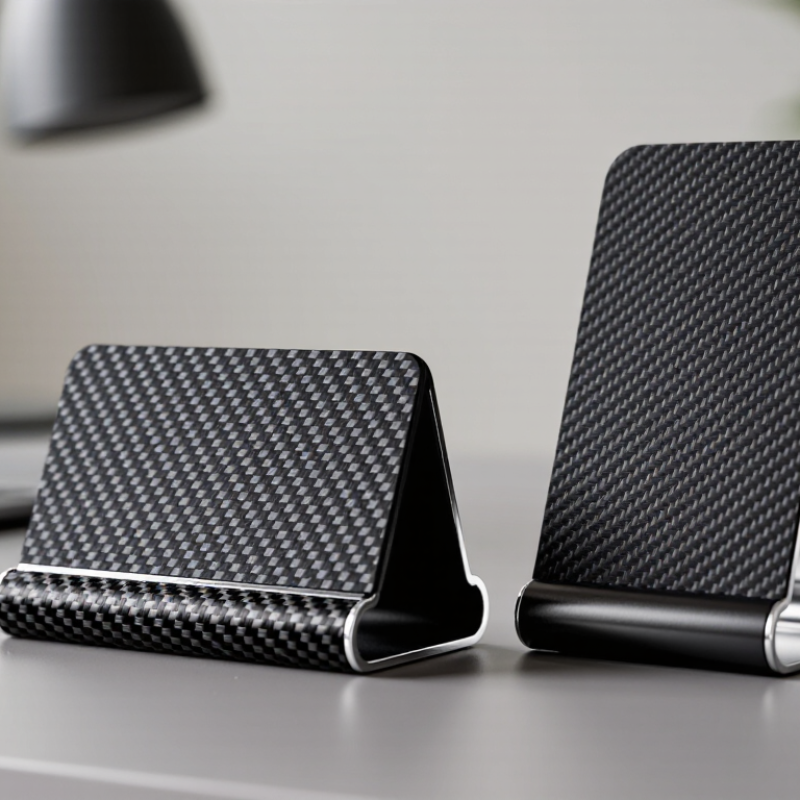
A carbon fiber gift for business buyers is defined by more than its material. It should feel useful, well finished, and appropriate for the recipient’s daily work. A slim card holder, desk accessory, or travel case can show the material’s woven texture without making the item feel flashy. The edge finish matters. Rough seams can undermine an otherwise polished gift.
For an OEM Carbon Fiber Gift, buyers should check the product’s actual construction, dimensions, and customization options before placing an order. Some items use carbon fiber only as a surface layer, while others include it as a structural component. Ask for a sample and inspect the weave, joints, and packaging in person. A photo can hide small flaws. That is easy to overlook.
Tips: Match the gift to how recipients work, not just to its appearance. Confirm personalization details and delivery timing in writing. If a sample feels awkward or too delicate, reconsider it; a premium look is not enough on its own.
Carbon fiber business gifts combine a distinctive technical appearance with low weight and practical everyday use. The examples below compare common gift categories and the factors buyers may consider.
| Gift Category | Typical Material Details | Approximate Weight | Business Use | Personalization Options | Buyer Considerations |
|---|---|---|---|---|---|
| Business card holder | Carbon-fiber outer panel or carbon-fiber-look finish with a metal or polymer frame | About 25–60 g | Client meetings, conferences, and employee recognition | Laser-engraved name, initials, or event date on a suitable metal surface | Compact and professional; check card capacity, edge finish, and whether the carbon fiber is structural or decorative. |
| Key organizer | Carbon-fiber plate or composite panel paired with a metal fastening system | About 20–50 g | Welcome kits, milestone awards, and practical client gifts | Engraving on a metal insert or a small printed message on the packaging | Useful for daily carry; confirm the number of keys supported and the quality of the screw or fastener. |
| Desk accessory | Carbon-fiber laminate or textured composite surface, often combined with metal or wood | Varies by item and size | Office onboarding, executive desks, and appreciation gifts | Engraved plaque, discreet logo-free message, or personalized gift card | Offers a visible premium finish; consider desk space, stability, and compatibility with the recipient’s setup. |
| Wallet or card sleeve | Carbon-fiber panel or composite shell with fabric, leather, or polymer components | About 30–90 g | Employee rewards, conference gifts, and customer appreciation | Initials, a short message, or an engraved metal detail | Check capacity, pocket layout, and finish. A carbon-fiber appearance does not necessarily indicate a fully carbon-fiber construction. |
| Pen or writing instrument | Carbon-fiber barrel, wrap, or composite accent with metal fittings | About 15–40 g | Meetings, formal recognition, and professional gift sets | Engraving on the barrel or presentation box, where the surface allows | Prioritize comfortable balance, refill availability, and a finish that withstands regular handling. |
| Portable phone stand | Carbon-fiber laminate or composite panel with a hinge or support made from another material | About 40–120 g | Remote-work kits, event giveaways, and desk-use gifts | Small engraved detail or customized packaging | Check device-size compatibility, viewing angles, hinge stability, and whether the stand folds for travel. |
Weight ranges are approximate and vary by product dimensions, construction, and added components. Buyers should confirm material composition, customization methods, minimum order quantities, and delivery timelines with the supplier before ordering.
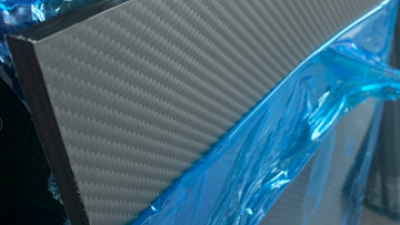
A 15 mm solid carbon fiber plate provides a rigid, lightweight foundation for industrial machining and precision equipment. Its high stiffness helps limit bending under load, supporting stable workholding and consistent performance in applications where dimensional accuracy matters. Made using professional compression molding, the plate offers a flat surface and controlled thickness, reducing the need for extensive preparation before it is incorporated into tooling or equipment.
Despite its strength, the material has a low density that can help reduce the overall weight of machinery and moving components. It also offers good dimensional stability, fatigue resistance, and protection against corrosion, acids, and alkalis, while remaining free from rust. The smooth surface and uniform fiber arrangement make the sheet practical to cut, drill, grind, and machine for specific designs. Suitable uses include automation components, testing fixtures, mechanical tooling, robotic parts, and aerospace accessories. Each panel is inspected before shipment, and custom cutting, shaping, and machining can be arranged to meet project requirements.
It should feel useful, well finished, and right for the recipient’s daily work. A slim card holder or desk accessory can show the woven texture without looking flashy.
Request a sample and check its weave, seams, edges, dimensions, and packaging. Photos can hide flaws. Rough edges are easy to miss.
No. Some products use it as a surface layer; others use it as a structural part. Ask for clear material details.
Figures near 4.9 GPa tensile strength and 1.80 g/cm³ density may describe raw fiber. They do not guarantee a finished item’s performance.
Card cases work well for meetings, while luggage tags suit frequent travelers. Cable organizers can be useful at events. Keep it practical.
Match it to the recipient’s routine. A shared workspace may suit a lightweight stand or desk organizer. A delicate item may sit in a drawer.
Confirm colors, textures, personalization, and delivery timing in writing. Ask to see the packaging, too. Details can slip.
No. Check the joints, finish, and weight in person. A glossy surface may show fingerprints, and a premium look is not enough. I would still question whether it feels right to use.
A Carbon Fiber Gift can combine a refined appearance, practical function, and lightweight strength, making it a distinctive choice for business buyers. Certain high-performance carbon fiber grades are associated with tensile strength around 4.9 GPa and a density near 1.80 g/cm³, illustrating how the material can be strong without adding unnecessary weight. That low density is especially useful for everyday gifts that recipients may carry or use regularly, such as desk accessories, writing instruments, card holders, or travel items.
Choosing the right gift means matching its form and function to the business relationship and intended use. Buyers should assess the finish, construction quality, customization options, and whether the design aligns with their organization’s image. Procurement teams should also verify material descriptions, performance claims, manufacturing consistency, and supplier specifications before ordering. Careful evaluation helps ensure the gift is attractive, dependable, and appropriate for the recipient, while avoiding assumptions based on appearance alone.