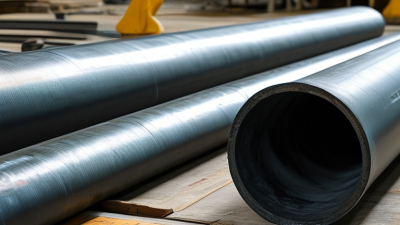
When it comes to global sourcing, people often jump to price as the main factor. But honestly, what’s *behind* that price really matters more than the number itself. Take Composite Plate, for example. It strikes a pretty good balance between strength, lightweight design, resistance to corrosion, and flexibility. All of these qualities are a huge plus for tough jobs in construction, transport, energy, and industrial equipment. That said, don’t just rely on glossy brochures—material choice isn’t something you can figure out from marketing alone.
Savvy buyers usually dig deeper—they look at fiber types, resin systems, thickness, surface finishes, and how well it performs under different temperatures. They also review production records, inspection methods, and traceability docs. A supplier worth trusting should be transparent, providing solid technical data and consistent quality across batches. And if you really want to get the full picture, a factory visit can reveal things that samples don’t show—like the edges, drilling results, packaging, and labels.
Of course, saving a buck is nice, but remember—doing so on materials can sometimes backfire. Things like freight costs, shipping times, customs hurdles, and the risk of having to replace parts can all turn a cheap deal into an unexpected expense. So, while Composite Plate may not be perfect for every project, it definitely depends on proper engineering, careful installation, and making sure the environment is suitable. Honestly, that last point often doesn’t get enough attention.
And let’s not forget that reliable sourcing comes down to good communication. Buyers should double-check drawings, tolerances, testing standards, and acceptance criteria before starting production. When it’s a critical application, independent testing can give an extra layer of confidence. It’s also smart when suppliers, like Fiberglass Solutions or Advanced Composite Materials, openly discuss their limits—not just the perks. That transparency builds trust.
At the end of the day, the best sourcing approach combines technical know-how with real-world experience. It means asking tough questions upfront and leaving room to adjust if needed. By looking at performance, compliance, service quality, and overall total costs, companies can confidently choose Composite Plate—fewer surprises, smoother international supply chains, and peace of mind included.
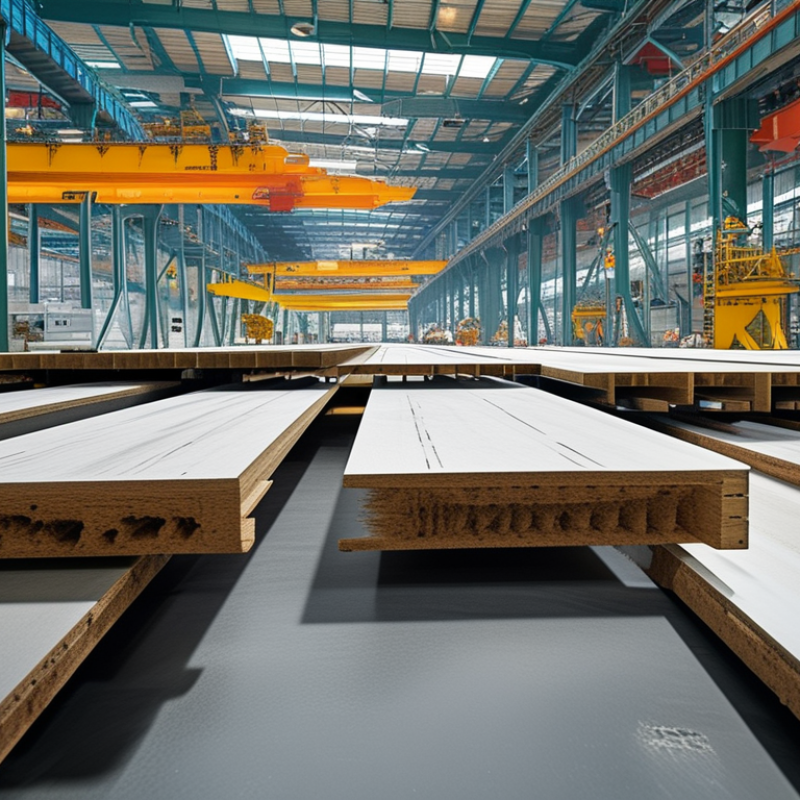
Why Choose Composite Plate for Global Sourcing?
Composite plate is a layered material, not a single solid substance. It combines reinforcing fibers with a polymer resin matrix. Glass, carbon, or aramid fibers provide strength. The resin holds them in position and transfers loads.
Manufacturing usually begins with cutting fiber sheets to controlled dimensions. Technicians then stack layers at selected angles, such as 0, 45, and 90 degrees. This orientation affects stiffness, impact resistance, and bending performance. Resin enters through hand lay-up, vacuum infusion, compression molding, or prepreg processing. Heat and pressure complete the curing stage. The finished plate may be trimmed, drilled, and inspected.
The details matter.
According to Grand View Research, the global composite materials market was valued at about USD 95 billion in 2022. It is projected to grow at roughly 7.6% annually from 2023 to 2030. This expansion reflects demand for lighter structural components and corrosion-resistant panels. However, global sourcing requires more than comparing thickness and price. Buyers should request fiber type, resin grade, fiber volume, curing temperature, and test standards. ASTM and ISO methods can verify tensile strength, flexural strength, density, and water absorption. A perfect-looking panel can still hide voids or uneven resin distribution. I would not treat catalog weight as proof of quality. Batch samples, dimensional checks, and traceable inspection records provide stronger evidence. Composite plate can reduce handling weight, but machining waste and transport conditions still deserve careful review.
Composite plate selection begins with its material system, not its advertised strength. Carbon fiber offers high stiffness and low weight. Glass fiber usually provides better cost control and impact tolerance. Aramid fiber can improve resistance to repeated shock. The matrix matters too. Epoxy thermosets deliver stable bonding and heat resistance. Thermoplastics support faster forming and easier recycling routes. According to Grand View Research’s 2024 composites market analysis, the global market reached about USD 102 billion in 2023. This growth reflects wider use in transport, construction, and industrial equipment.
Structure defines performance in practical service. A solid laminate uses stacked plies with controlled fiber directions. A 0° layer carries longitudinal loads. A 90° layer supports transverse stability. ±45° layers resist twisting and shear. Sandwich plates add a foam or honeycomb core between thin skins. They feel light in the hand, yet resist bending through greater thickness. A 3k Composite Plate uses 3,000-filament carbon tow, often producing a balanced surface and consistent weave. However, a higher fiber count does not automatically mean better performance. Voids, poor curing, and uneven resin distribution can weaken an impressive-looking panel. ASTM D3039 tensile testing and ISO 14125 flexural testing help verify supplier claims.
Tips: Request the fiber type, weave, resin system, core density, ply schedule, and tolerance sheet. Ask for batch-level test records, not only a catalog value. Check the loading direction with a physical sample. I have seen lightweight panels fail because fasteners crushed the core. Design review should include edges, holes, moisture, heat, and repair access. Suppliers may resist detailed disclosure, but unclear structure increases sourcing risk.
Composite plate offers a practical balance between low weight and structural strength. The U.S. Department of Energy reports that a 10% vehicle weight reduction can improve fuel economy by 6–8%. This principle also applies to machinery covers, transport panels, and modular structures. A lighter panel can reduce lifting effort, support thinner frames, and lower installation costs. Composite Plate Fit matters here. Designers must match thickness, fiber direction, edge support, and load paths. A strong material can still fail when the fit is careless.
Corrosion resistance is another measurable advantage. Unlike unprotected steel, many composite plates resist moisture, salts, and common industrial chemicals. This can reduce repainting and replacement work in coastal facilities. The Global Wind Energy Council recorded 117 gigawatts of new wind capacity in 2023. That expansion increases demand for durable, lightweight structural components. Composite plates also provide useful fatigue performance under repeated vibration. Quietly useful.
Thermal and electrical insulation can simplify equipment design. However, performance is not automatic. Poor drilling may create cracks, while uneven clamping can cause local stress. A 2023 review from the U.S. National Renewable Energy Laboratory notes that composite structures require careful inspection and end-of-life planning. That limitation deserves attention during global sourcing. Suppliers should provide test results for tensile strength, flexural strength, water absorption, and fire behavior. In practice, I would request samples, measure flatness, and inspect drilled edges before approving volume production.
When sourcing materials globally, buyers often compare Solid Composite Plate with steel, aluminum, and timber. The choice is rarely simple. In practical projects, composite plate offers a useful balance of low weight, corrosion resistance, and dimensional stability. A 10-millimeter panel can be carried by two workers, while an equivalent steel component may require lifting equipment. This difference affects shipping, installation time, and handling risk at remote sites.
Traditional steel remains strong and familiar, especially where impact loads and high temperatures dominate. Yet it can arrive with scratches, surface oxidation, or unexpected coating repairs after sea transport. Aluminum resists corrosion and weighs less, but its higher material cost may narrow a sourcing budget. Timber feels accessible and easy to machine, although moisture can cause swelling, warping, or inconsistent dimensions. Composite plate avoids some of these problems, but it is not universally superior.
Real evaluation should examine load requirements, temperature exposure, fire performance, thickness, and local fabrication skills. A supplier’s test data matters, but buyers should verify sample dimensions and batch consistency before placing large orders. I have found that a clean cutting edge can reveal more than a glossy brochure. Still, early samples may not represent long-term outdoor performance. That uncertainty deserves attention. Comparing total delivered cost, not only the purchase price, often changes the final decision.
| Comparison Dimension | Fiber-Reinforced Composite Plate (Typical GFRP) | Carbon Steel Plate | Aluminum Plate (Common Structural Grades) | Stainless Steel Plate |
|---|---|---|---|---|
| Typical Density | 1.8–2.0 g/cm³ | 7.8–7.9 g/cm³ | 2.6–2.8 g/cm³ | 7.7–8.1 g/cm³ |
| Approximate Weight at Equal Volume | Baseline: 1.0× | Approximately 4.0–4.4× heavier | Approximately 1.3–1.5× heavier | Approximately 3.9–4.5× heavier |
| Typical Tensile Strength | Approximately 200–600 MPa; strongly dependent on fiber direction, laminate construction, and resin system | Approximately 400–550 MPa for common structural plate grades | Approximately 200–350 MPa for common structural grades | Approximately 500–750 MPa for commonly used austenitic and duplex grades |
| Typical Elastic Modulus | Approximately 20–50 GPa; directional and laminate-dependent | Approximately 200 GPa | Approximately 69–72 GPa | Approximately 190–200 GPa |
| Strength-to-Weight Potential | High in the fiber direction; useful where low mass and corrosion resistance are important | Moderate; high stiffness but high density | Good; lower density with moderate stiffness | Moderate; high strength and corrosion resistance with high density |
| Corrosion Resistance | Very good against moisture, salts, and many chemicals; resin compatibility must be verified | Low without painting, coating, galvanizing, or other protection | Good in many atmospheric environments; vulnerable to galvanic and chemical attack in some conditions | Very good in many environments; grade selection is important for chloride and chemical exposure |
| Electrical Conductivity | Generally electrically insulating, unless conductive fibers or fillers are incorporated | Conductive | Highly conductive | Conductive |
| Thermal Conductivity | Typically approximately 0.3–1.0 W/m·K, depending on fiber and resin content | Typically approximately 45–60 W/m·K | Typically approximately 150–235 W/m·K | Typically approximately 14–16 W/m·K |
| Continuous Service Temperature | Often approximately 65–120°C for common thermoset systems; confirm the resin specification | Suitable for higher-temperature service, although strength and coating performance decline as temperature rises | Suitable for moderate-temperature service; mechanical strength decreases noticeably at elevated temperatures | Suitable for elevated-temperature service; exact limits depend on grade, loading, and environment |
| Moisture Absorption | Low but not zero; laminate design, edges, and resin type affect absorption | Does not absorb water, but exposed surfaces can rust | Does not absorb water; surface and galvanic corrosion may occur in some environments | Does not absorb water; localized corrosion remains possible in aggressive chloride environments |
| Dimensional Stability | Good when properly designed; anisotropic thermal expansion must be considered | Generally predictable and isotropic | Generally predictable; higher thermal expansion than steel | Generally predictable and isotropic; thermal expansion differs by grade |
| Maintenance Requirements | Usually low; inspect for impact damage, delamination, UV degradation, and exposed fibers | Usually high in wet or marine environments because coatings and corrosion control require maintenance | Usually low to moderate; inspect for surface damage and galvanic contact | Usually low; cleaning may be needed to maintain appearance and reduce surface contamination |
| Fabrication and Installation | Can be cut and drilled with suitable tools; avoid fiber damage and control dust during machining | Weldable and widely fabricated; heavy lifting and corrosion protection may be required | Easy to machine and form; welding requires suitable processes and operator control | Fabrication is widely available but cutting and welding can require more specialized procedures |
| Joining Options | Mechanical fastening, structural adhesives, bonded inserts, and molded connections | Welding, bolting, riveting, and mechanical fastening | Welding, bolting, riveting, and mechanical fastening; galvanic isolation may be needed | Welding, bolting, riveting, and mechanical fastening |
| Impact and Damage Behavior | May show hidden delamination or fiber damage after impact; non-destructive inspection can be useful | Usually shows visible yielding or denting before fracture | Can dent or deform under impact; damage is often visible | Generally ductile; deformation is commonly visible before failure |
| Fire and Smoke Considerations | Performance depends on resin, additives, thickness, and certification; fire-rated grades may be required | Non-combustible as a metal, although coatings and attached materials may burn | Non-combustible as a metal, but it loses strength at elevated temperatures | Non-combustible as a metal, but it loses strength at elevated temperatures |
| Recyclability | More difficult to recycle than metals; mechanical recycling, thermal recovery, and specialized composite-recycling routes are available | Highly recyclable through established metal-recycling systems | Highly recyclable through established metal-recycling systems | Highly recyclable through established metal-recycling systems |
| Global Sourcing Considerations | Confirm fiber orientation, resin chemistry, laminate schedule, tolerances, UV/fire requirements, test standards, packaging, and inspection documents | Confirm material standard, thickness tolerance, surface condition, coating system, weldability, mill certificates, and corrosion protection | Confirm alloy and temper, surface finish, flatness, thickness tolerance, weldability, and mill certificates | Confirm grade, surface finish, heat treatment, corrosion environment, thickness tolerance, and mill certificates |
| Best-Fit Applications | Walkways, platforms, covers, electrical enclosures, structural panels, chemical-service components, and lightweight access systems | Heavy structural frames, pressure-related components, machinery bases, and applications requiring high stiffness and weldability | Lightweight structures, transportation components, architectural panels, and applications requiring conductivity or formability | Food, chemical, architectural, marine, and hygienic applications requiring strong corrosion resistance |
Technical note: Values are representative ranges for commonly used material families, not guaranteed product specifications. Actual performance depends on grade, fiber orientation, laminate construction, manufacturing process, temperature, loading direction, and service environment.
Sourcing note: For international procurement, compare total installed cost rather than purchase price alone, including freight weight, corrosion protection, machining, installation equipment, maintenance, replacement intervals, and required testing.
Why Choose Composite Plate for Global Sourcing?
What Should Buyers Evaluate Before Global Sourcing?
Composite plate can reduce weight, improve stiffness, and simplify installation. Yet performance depends on more than the material name. Buyers should define load, temperature, moisture, impact, and expected service life before requesting quotations.
Request samples from several suppliers and compare them under identical conditions. Check thickness tolerance, surface finish, fiber orientation, resin content, and edge quality. A plate may look perfect while hiding uneven layers inside. Independent testing can verify strength, fire behavior, chemical resistance, and dimensional stability. Test reports should show methods, dates, sample details, and laboratory qualifications.
Supplier capability deserves equal attention. Review production capacity, process controls, inspection records, and traceability for each batch. Ask how rejected plates are handled. Also examine minimum order quantities, packaging, lead times, customs documents, and replacement procedures. Moisture-resistant wrapping and rigid separators can prevent damage during long transport. A low quotation can still become expensive after delays, rework, or inconsistent quality.
Cost comparisons should include the complete landed price. That means material, tooling, freight, duties, testing, storage, and possible waste. Environmental claims need evidence, not attractive wording. Buyers may request recycled-content data, manufacturing disclosures, and responsible waste practices. No evaluation is flawless. Specifications can be incomplete, and supplier promises can age quickly. Small pilot orders and documented inspections provide a more reliable starting point.
Why Choose Composite Plate for Global Sourcing?
How Can Companies Manage Cost, Compliance, and Supply Risks?
Global sourcing is rarely decided by unit price alone. An OEM Composite Plate may reduce weight, machining time, and maintenance needs, yet freight and rework can erase those savings. The UNCTAD Review of Maritime Transport 2023 reports that over 80% of global merchandise trade moves by sea. A delayed container can therefore affect production schedules for weeks. Buyers should compare landed cost, including packaging, inspection, duties, storage, and replacement risk.
Compliance needs evidence, not promises. Request material declarations, batch numbers, dimensional records, and performance test reports before approval. Check fire, chemical, mechanical, and environmental requirements for the destination market and application. The World Bank’s Logistics Performance Index 2023 found that international shipments take a median 44 days from exporter warehouse to importer warehouse. That time creates more opportunities for documentation errors. A controlled supplier file helps.
Keep a second source qualified early. Not later.
Supplier audits should examine process capability, raw material traceability, corrective actions, and emergency capacity. The OECD Due Diligence Guidance supports risk-based checks across supply chains, rather than relying only on certificates. This approach costs time, but an unverified saving can become an expensive lesson. We still underestimate small risks, especially unclear tolerances and packaging damage. A pilot order with sample testing, photographed inspections, and agreed acceptance limits makes those weaknesses visible before full production.
Key compliance thresholds that influence material selection, supplier qualification, and global supply-risk management.
Composite plate sourcing should be evaluated against measurable regulatory requirements. RoHS limits lead and other restricted substances to 0.1% by weight in homogeneous materials, while cadmium is limited to 0.01%. REACH requires communication when a Candidate List substance exceeds 0.1% by weight. ISPM 15 requires compliant wood packaging to reach a core temperature of 56°C for at least 30 minutes. Early supplier documentation and material testing can reduce compliance delays, rework, and supply disruption.
Carbon fiber offers high stiffness with low weight. Glass fiber usually costs less and tolerates impacts better. Aramid fiber can handle repeated shock. The resin also matters.
Fiber direction controls how loads move through the plate. Zero-degree layers carry lengthwise loads. Ninety-degree layers improve crosswise stability. Plus-or-minus 45-degree layers resist twisting and shear. Small details matter.
It combines thin outer skins with a foam or honeycomb core. The thicker structure resists bending without adding much weight. It feels surprisingly light by hand. However, fasteners can crush the core around drilled holes.
Composite plates can reduce weight, lifting effort, and installation time. They often resist moisture, salt, and common industrial chemicals. They can also perform well under repeated vibration. The benefit depends on correct thickness and support.
Some composite plates provide useful thermal and electrical insulation. This can simplify equipment covers and structural panels. Performance varies with the resin, fibers, thickness, and temperature. Do not assume insulation without test data.
Composite plates are often lighter than steel and more corrosion-resistant. Aluminum is also lightweight and resists corrosion. Steel remains useful for severe impacts and high temperatures. The best choice depends on the load, environment, and total delivered cost.
Request fiber type, weave, resin system, core density, and ply schedule. Ask for thickness and dimensional tolerance records. Batch-level test results are more useful than catalog claims. Suppliers may provide incomplete details. That creates sourcing risk.
Measure thickness, flatness, and visible surface quality. Inspect drilled edges for cracks or fiber pullout. Check holes, corners, and fastener areas carefully. Test a physical sample in the expected loading direction. A glossy surface proves little.
Composite Plate is an engineered material made by bonding two or more layers with different properties into a unified structure. Depending on the application, it may combine metals, alloys, polymers, or reinforced cores to achieve a balance of strength, durability, weight, corrosion resistance, and thermal performance. Its layered design allows manufacturers to place each material where it delivers the greatest value, making it suitable for demanding industrial, construction, transportation, and energy-related applications.
For global sourcing, buyers should compare Composite Plate with traditional single-material options by evaluating service life, fabrication requirements, dimensional consistency, and total operating cost rather than purchase price alone. Important considerations include material specifications, bonding quality, testing procedures, certifications, production capacity, delivery reliability, and technical support. Companies should also assess currency fluctuations, transportation conditions, import requirements, documentation, and contingency plans. A careful sourcing strategy can help control costs, maintain compliance with applicable regulations, reduce supply interruptions, and ensure that the selected plate consistently meets project performance requirements.